Packing · 2 min read
How to pack a kitchen without mystery boxes
Pack by cupboard, label by contents and keep one small kitchen kit out. You will find what you need much faster after the move.
At a glance
Your quick checklist
- Daily-use kit set aside
- Small, manageable boxes for heavy items
- Room and contents written on two sides
- Appliance preparation checked in the manual
Keep a small working kitchen
Set aside the cups, plates, cutlery and cooking essentials you need until moving day. Pack the occasional-use items first. This avoids reopening several sealed boxes because the kettle or breakfast bowls disappeared too early.
Give each box one clear job
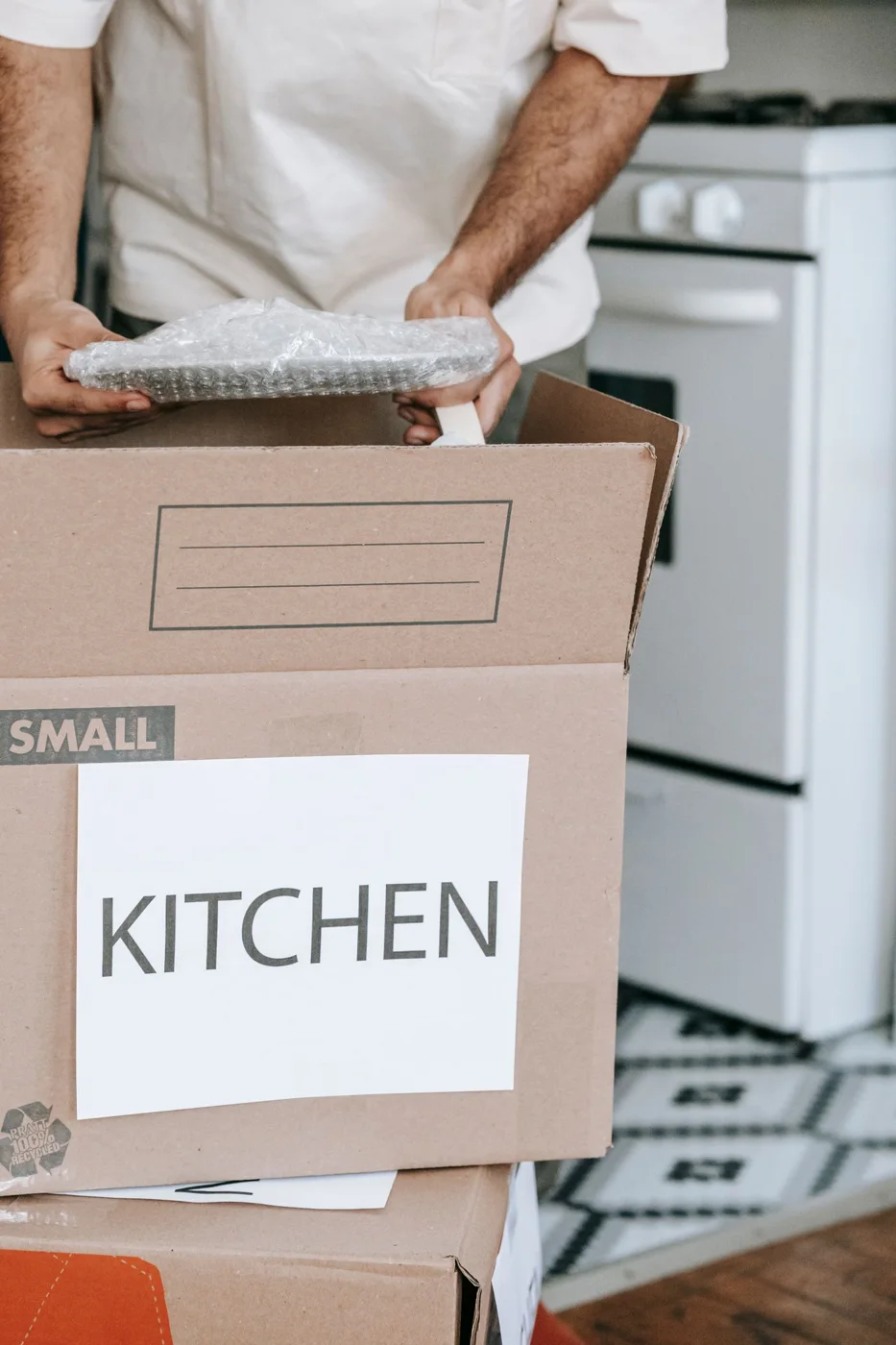
Use manageable boxes for heavy kitchenware. Protect fragile pieces individually, separate surfaces that could knock together and fill empty space so items cannot shift freely. Follow any special packing guidance for your appliances. Do not make a box heavier just because there is space left.
Write labels that help at the other end
Kitchen is a room label, not a contents label. Try “Kitchen: everyday mugs and glasses” or “Kitchen: baking trays”. Put the label on the side as well as the top. Mark the box you want opened first and keep a quick photo of any unusual appliance setup before disconnecting it.
Separate things that should not leak
Do not mix food, cleaning products and fragile dishes in one box. Check lids and explain liquids or other restricted items to the mover before packing them. Defrosting, draining or securing an appliance may require steps in its manual; schedule those before the crew arrives.